Why Is Natrium Formate Used in Industry?
Natrium Formate, commonly known as sodium formate, is a water-soluble salt used in several industrial processes. It usually appears as a white crystalline powder, easy to measure and blend into aqueous formulations. That practical form matters. In manufacturing, a material’s value depends not only on its chemistry but also on how consistently it performs in a production line.
Its uses include textile processing, leather treatment, and selected oilfield fluid formulations. In textiles, it can help manage process conditions during dyeing and finishing. In leather production, it may support steps where controlled chemical conditions are important. Oilfield applications can use it in specialized fluid systems, though suitability depends on the well design and formulation. These are not interchangeable uses. Each requires attention to grade, concentration, compatibility, and process controls.
Why choose it over another chemical? The answer depends on the task, operating conditions, and required product quality. Buyers and plant operators typically review specifications such as purity, moisture content, and solubility, then confirm performance through supplier documentation and testing. Small details count. A batch that dissolves differently may disrupt mixing or affect a downstream step. Natrium Formate is not a universal solution, and its role can be easy to overstate. Understanding where it fits—and where it does not—offers a more reliable view of its industrial importance.
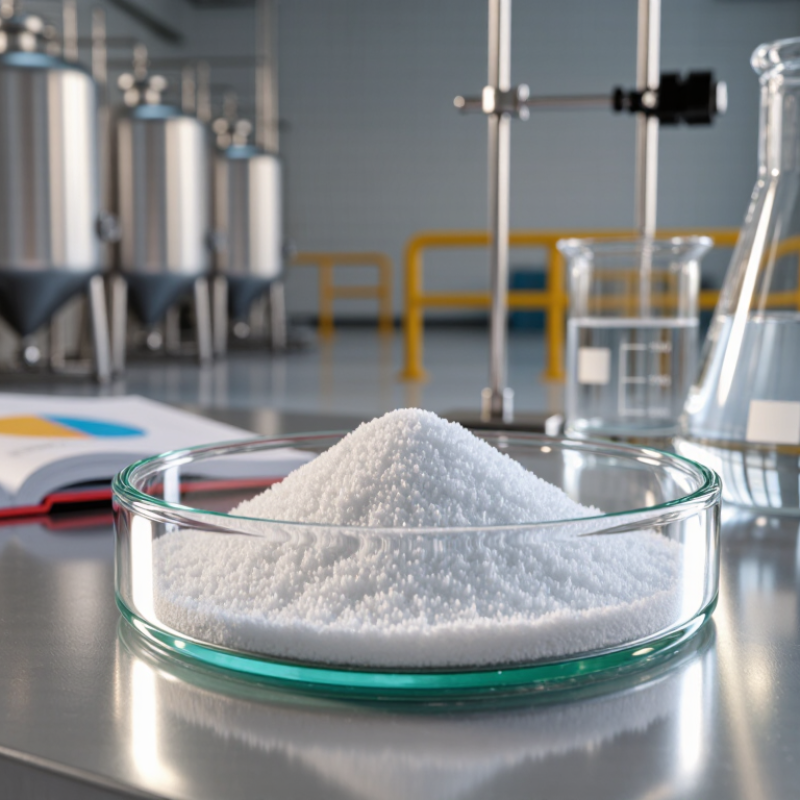
Chemical Identity and Key Properties of Natrium Formate
Natrium formate, more commonly called sodium formate, is the sodium salt of formic acid. Its chemical formula is HCOONa. In its usual commercial form, it is a white, crystalline solid with no strong odor. It dissolves readily in water, making it practical for processes that use prepared solutions. The crystals can look almost like fine sugar, but they are an industrial chemical, not a food ingredient.
These properties help explain its use in several industries. Water solubility supports its use in textile and leather processing, while formulated solutions can serve as components in some drilling fluids and deicing products. Sodium formate solutions are generally mildly alkaline, though their behavior depends on concentration and other ingredients. The dry material is convenient to handle, but dust, moisture, and incompatible materials still require attention. Small differences in purity or solution strength can matter in production; that detail is easy to underestimate.
Tips: Check the product’s safety data sheet and technical specification before use. Keep the container closed and dry, and avoid judging solution strength by appearance alone. Use suitable protective equipment when weighing the powder. If a process relies on a specific pH or concentration, measure it rather than assuming the material will behave identically in every mixture.
How Its Properties Support Industrial Processes
Sodium formate supports industrial processes because it dissolves readily in water and can be measured into consistent solutions. That matters on a production floor, where uneven mixing can affect a batch. In selected chemical formulations, it also acts as a mild reducing agent or helps manage acidity. Its role depends on the other ingredients, temperature, and process conditions. Small details matter.
In textile and leather processing, it may be used as an auxiliary to help manage process chemistry. In specialized well fluids, concentrated sodium formate brines can provide adjustable density. The benefit is practical: operators can tune a solution to fit equipment and operating needs. But the fit is not automatic. Concentration, material compatibility, and temperature need checking before use, since a useful property in one process may be a drawback in another. Sodium formate is not a universal fix, and process trials can reveal complications that a specification sheet misses.
Major Industrial Applications of Natrium Formate
Natrium formate, commonly called sodium formate, serves as a practical process chemical in textile dyeing and leather processing. In dye baths, it can help control pH and support more even color uptake; in tanneries, it is used during processing to promote consistent treatment of hides. These roles matter at industrial scale: Textile Exchange’s Materials Market Report 2024 puts global fiber production at 124 million tonnes in 2023. That figure describes the market, not sodium formate consumption. The distinction is important.
Another application is in specialist fluids for oil and gas operations, where concentrated formate brines can provide density without suspended solid particles. Sodium formate also appears in some de-icing and heat-transfer formulations. The World Footwear Yearbook 2024 reports global footwear production of 22.4 billion pairs in 2023, illustrating the scale of industries that depend on upstream leather processing. Still, demand varies sharply by process and formulation. Sodium formate is not a universal replacement for other pH-control or fluid ingredients, and actual performance depends on concentration, temperature, and material compatibility. Plant trials matter. Industry-wide consumption figures remain difficult to isolate from broader chemical-use statistics.
Advantages Over Alternative Process Chemicals
Sodium formate is useful when a process needs a controllable source of formate ions without handling concentrated formic acid. As a crystalline solid, it can be weighed and fed into a batch with less splash risk than a liquid acid. The European Chemicals Agency’s registration dossier reports a melting point near 253°C, supporting its stability during ordinary dry storage. PubChem lists its molecular weight as 68.01 g/mol, a practical figure for calculating precise additions.
Compared with sodium chloride, sodium formate avoids adding chloride ions to a process stream. That matters in applications where chloride can accelerate metal corrosion or complicate wastewater treatment. In textile processing and leather manufacture, it can help adjust process chemistry while fitting established salt-handling equipment. In de-icing formulations, formate salts offer another option where chloride loading is a concern. The trade-off is cost: formate chemicals may be more expensive than common chloride salts, so substitution needs a site-specific calculation.
There are limits. ECHA data and supplier handling guidance should inform storage and exposure controls, not assumptions based on the word “salt.” Formate is biodegradable, but its breakdown consumes oxygen; spills or excessive discharge can still stress receiving waters. Not a free pass. Plants should verify dosage, material compatibility, and local wastewater capacity through trials, since a formulation that works in one water system may behave differently in another.
Why Is Sodium Formate Used in Industry?
One practical advantage is its high water solubility, which allows concentrated aqueous process fluids to be prepared.
Approximate solubility at 20°C, expressed as grams of chemical per 100 grams of water. Sodium formate’s published value of about 97 g per 100 mL of water is converted using water’s density at 20°C. Higher solubility can help when preparing concentrated brines; suitability still depends on the process and operating conditions.
Reference data: PubChem compound summaries for sodium formate and sodium chloride; values are approximate.
Safe Handling, Storage, and Environmental Considerations
Why Is Natrium Formate Used in Industry?
Safe Handling, Storage, and Environmental Considerations
Sodium formate is used in industrial processes partly because it dissolves readily in water. PubChem reports a molecular weight of 68.01 g/mol and water solubility of about 97 g per 100 mL at 20°C. That solubility is useful in formulations, but it also means spilled powder can quickly contaminate wash water. Treat it as a process chemical, not as harmless salt.
Handle bags or transfer points with local dust extraction, safety glasses, and suitable gloves. Avoid breathing dust; even materials with modest hazard profiles can irritate eyes and airways. Keep containers sealed in a cool, dry, ventilated area, away from incompatible chemicals such as strong acids. For spills, collect dry material with methods that limit dust, then manage cleanup water under site procedures. ECHA registration information and supplier safety data sheets are useful checks, but conditions differ between plants. That deserves attention.
Tips: Label transfer containers clearly. Keep a spill kit nearby. Prevent release to drains, and check local wastewater requirements before rinsing equipment. Review the current safety data sheet with operators; an old copy on the wall is not enough.
