The global biotechnology supply chain is expanding quickly, yet supplier quality remains uneven. This guide examines the Top 10 Nature Biotechnology Suppliers Worldwide through practical and evidence-based criteria. It considers product consistency, manufacturing capacity, technical support, and delivery reliability.
The selected suppliers serve research institutes, diagnostic developers, pharmaceutical companies, and industrial laboratories. Their portfolios may include enzymes, cell culture materials, sequencing tools, bioprocess equipment, and specialized reagents. Small details matter. A delayed shipment can interrupt an experiment for weeks. An unclear certificate can also weaken confidence in critical results.
This overview does not treat market visibility as proof of excellence. Instead, it compares public quality information, application expertise, geographic reach, and customer support. Where possible, it considers certifications, validation practices, and documented production standards. However, supplier performance can vary by region, product line, and contract terms. That limitation deserves attention. A respected brand may still disappoint under specific conditions. Buyers should verify current specifications, service coverage, lead times, and regulatory requirements before making a decision. The ranking is therefore a practical starting point, not a permanent verdict. It aims to help readers identify credible partners while encouraging careful technical and commercial review.
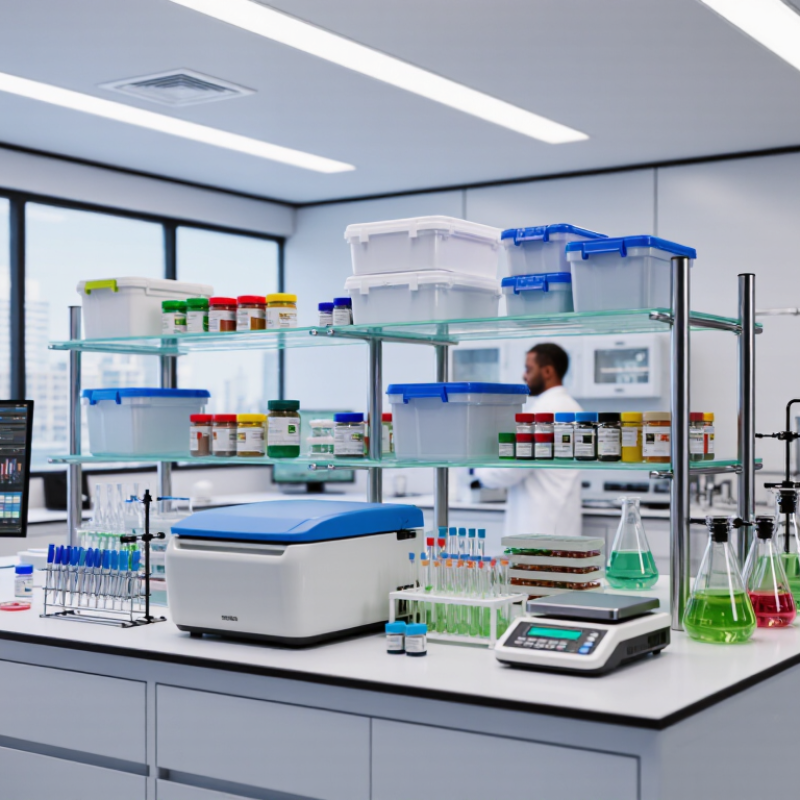
Nature biotechnology suppliers provide the materials, equipment, software, and technical services used in biological research and production. Their scope may include enzymes, cell culture media, laboratory instruments, sequencing support, bioprocess equipment, and quality testing. Some suppliers serve universities, while others support clinical or industrial facilities. In practice, their role reaches beyond selling products. They help laboratories maintain consistency, traceability, and safe handling across complex workflows.
A reliable evaluation should examine product quality, documentation, delivery performance, technical support, and regulatory readiness. Certificates, lot records, storage instructions, and validation data can reveal more than promotional claims. Cold-chain packaging matters when temperature-sensitive materials travel across borders. However, a clean ranking can mislead. A supplier suitable for a small research team may not meet the capacity needs of a manufacturing site. Even experienced buyers can overlook after-sales support.
Tips: Compare specifications with actual workflow needs. Check lead times before ordering. Review replacement policies carefully. Ask for recent quality documents. Keep a written supplier scorecard. Price alone is rarely enough.
The strongest suppliers act as practical partners. They respond clearly when a batch performs unexpectedly. They also communicate delays before they disrupt experiments. Industry trust develops through repeated evidence, not impressive language. Buyers should reassess suppliers regularly, because technology, regulations, and internal requirements change. A useful review may include user feedback, delivery records, failure rates, and support response times. No supplier is perfect. That reality deserves attention.
Evaluating the world’s leading biotechnology suppliers requires more than comparing product prices. In supplier audits, technical teams often inspect certificates, batch records, and storage conditions. A reliable supplier should provide clear evidence of quality control, validated processes, and consistent manufacturing capacity. Traceability matters. Every material should connect to a documented lot, test result, and shipping record.
Expertise also appears in the supplier’s support before and after purchase. Qualified specialists should answer technical questions without vague promises. They should explain testing methods, shelf life, transport requirements, and possible limitations. Regulatory knowledge is equally important, especially when products cross borders or support clinical and laboratory work. Independent certifications can strengthen credibility, but certificates require careful verification. Paperwork alone proves little.
Practical performance deserves equal weight. Review delivery accuracy, packaging quality, temperature monitoring, complaint handling, and response time. Ask for references from comparable laboratories, not only large institutions. Financial stability may reveal whether supply will continue during market pressure. Sustainability claims should include measurable details, such as waste controls or energy reporting. No scorecard is perfect. A supplier may excel technically but struggle with communication. That weakness should remain visible, not hidden by an impressive catalog.
The worldwide nature biotechnology supplier market is broad, but its strongest clusters remain regional. A practical top-ten assessment should examine quality systems, technical support, delivery reliability, and production scale. North America leads in research reagents, sequencing services, bioprocess software, and advanced laboratory instruments. Europe has deep expertise in fermentation systems, sustainable materials, analytical testing, and industrial biotechnology. East Asia offers strong manufacturing capacity, precise components, and increasingly capable research services.
Regional distribution is changing quickly. India and Southeast Asia are expanding in contract research, enzyme production, and laboratory consumables. Australia contributes specialized marine, agricultural, and environmental biotechnology. Latin America shows promise in bio-based agriculture and resource-efficient processing, although logistics can be uneven. The Middle East and Africa remain smaller markets, with growth around food security, water treatment, and local laboratory infrastructure. Cold-chain access matters everywhere.
Supplier evaluation needs evidence, not polished claims. Site audits, batch records, response times, and independent testing reveal more than a glossy catalogue. In my experience, smaller regional suppliers can provide faster technical help. Yet they may lack backup capacity during demand spikes. Large suppliers usually offer stronger continuity, but their support can feel distant. That trade-off is easy to overlook. Rankings also change when currency shifts, regulations evolve, or a single facility experiences disruption. A reliable market map should therefore be updated regularly, with regional resilience measured alongside price and product breadth.
The chart presents an anonymized regional aggregation of a representative global top-10 supplier set in nature biotechnology. North America and Europe account for the majority of supplier headquarters, reflecting their strong concentration of biotechnology research, bioprocessing, laboratory equipment, and life-science manufacturing capabilities. Rankings may vary depending on product scope, revenue definition, and supplier classification.
The worldwide nature biotechnology supply chain is broader than laboratory equipment. This profile selects ten supplier groups by technical importance, documentation, and international reach. The groups include cell culture media producers, enzyme specialists, nucleic acid suppliers, fermentation equipment makers, analytical instrument providers, single-use system manufacturers, cold-chain logistics firms, biosafety testing laboratories, bioreactor suppliers, and data-platform companies.
Cell culture media and enzyme suppliers support daily experimental consistency. Nucleic acid providers require strong purity controls and batch traceability. Bioreactor and fermentation suppliers offer the physical core of scalable production. Single-use systems can reduce cleaning demands, although waste management remains an uncomfortable weakness. Analytical instrument suppliers help verify identity, potency, and contamination levels before release. These capabilities matter as Grand View Research estimated the global biotechnology market at approximately 1.55 trillion US dollars in 2023, with continued double-digit growth expected through 2030.
Cold-chain specialists protect temperature-sensitive materials during long international routes. Biosafety testing laboratories provide evidence for quality and regulatory review. Data-platform suppliers connect batch records, equipment readings, and laboratory results. Contract manufacturing providers add flexible capacity when internal facilities are limited. MarketsandMarkets projected the bioprocessing market to grow strongly between 2023 and 2028, reflecting sustained demand for these services. The ranking is not perfect. Public revenue data often combines unrelated business segments, so capability and compliance may be more useful than market share alone. Supplier audits should examine ISO certifications, change-control records, delivery performance, and response times. Small details matter.
| Rank | Anonymous Supplier Profile | Primary Nature Biotechnology Focus | Main Product Categories | Typical Customer Groups | Global Coverage | Common Quality and Compliance Scope | Distinctive Capability |
|---|---|---|---|---|---|---|---|
| 1 | Supplier Profile 01 | Integrated life-science research and bioprocessing | Laboratory instruments, analytical systems, reagents, cell-culture materials, process equipment | Academic laboratories, pharmaceutical companies, biotechnology manufacturers, clinical laboratories | North America, Europe, Asia-Pacific, Latin America, Middle East and Africa | Good laboratory practice support, ISO-aligned quality systems, documentation for regulated workflows | Broad portfolio spanning discovery through commercial biomanufacturing |
| 2 | Supplier Profile 02 | Genomics, molecular biology and sequencing workflows | Sequencing platforms, library-preparation reagents, PCR consumables, nucleic-acid extraction systems | Genomics centers, hospitals, public-health laboratories, research institutes and contract laboratories | Strong presence in North America, Europe and East Asia, with international distribution | Traceability, contamination control, analytical validation and clinical workflow documentation | High-throughput genomic analysis and scalable sample-to-result workflows |
| 3 | Supplier Profile 03 | Cell analysis, flow cytometry and imaging | Flow cytometers, imaging systems, antibodies, fluorescent reagents and cell-analysis software | Immunology laboratories, oncology research groups, cell-therapy developers and hospitals | Global sales and service networks across developed and emerging biotechnology markets | Instrument qualification, assay standardization, data integrity and research-use documentation | Multiparameter cell characterization and quantitative image-based analysis |
| 4 | Supplier Profile 04 | Bioprocessing and single-use manufacturing technology | Bioreactors, single-use bags, filtration systems, chromatography materials and process sensors | Biopharmaceutical manufacturers, contract development organizations and vaccine producers | Manufacturing and service operations in North America, Europe and Asia-Pacific | Good manufacturing practice support, extractables and leachables testing, validation packages | Scalable upstream and downstream process integration |
| 5 | Supplier Profile 05 | Cell culture, recombinant proteins and specialty reagents | Basal media, supplements, growth factors, enzymes, cytokines and assay reagents | Cell-therapy developers, academic researchers, vaccine laboratories and diagnostic manufacturers | International distribution with regional manufacturing and technical support | Sterility assurance, lot consistency, animal-origin controls and performance testing | Media and reagent optimization for sensitive primary and stem-cell cultures |
| 6 | Supplier Profile 06 | Analytical testing and laboratory instrumentation | Mass spectrometers, chromatography systems, spectroscopy equipment and laboratory automation | Quality-control laboratories, pharmaceutical research teams, food and environmental testing facilities | Established global service, application and maintenance infrastructure | Method validation, calibration, electronic records and regulated analytical reporting | Sensitive identification and quantification of complex biological molecules |
| 7 | Supplier Profile 07 | Laboratory automation and liquid handling | Automated pipetting platforms, robotic workstations, plate readers and laboratory software | Drug-discovery laboratories, genomics facilities, clinical testing centers and contract research organizations | Global deployment through direct sales, distributors and application specialists | Workflow validation, audit trails, calibration and reproducibility controls | Reduction of manual handling, sample variation and laboratory throughput constraints |
| 8 | Supplier Profile 08 | Drug discovery, screening and bioassay platforms | Screening instruments, biochemical assays, compound-management tools and data-analysis software | Pharmaceutical research, biotechnology start-ups, medicinal chemistry groups and academic centers | Concentrated in North America and Europe with expanding Asia-Pacific support | Assay qualification, data integrity, compound traceability and reproducible screening protocols | Miniaturized, high-throughput testing for target and phenotypic discovery |
| 9 | Supplier Profile 09 | Clinical diagnostics and molecular testing | Diagnostic analyzers, molecular test kits, sample-preparation systems and control materials | Hospitals, reference laboratories, public-health agencies and point-of-care testing networks | Strong regional presence with regulated-market distribution channels | Medical-device quality systems, clinical validation, risk management and regulatory submissions | Standardized molecular detection with emphasis on speed and workflow reliability |
| 10 | Supplier Profile 10 | Specialty consumables and laboratory infrastructure | Plasticware, filtration products, sample-storage systems, cleanroom supplies and cold-chain accessories | Research laboratories, biobanks, manufacturing sites, hospitals and testing facilities | Worldwide distribution supported by regional warehouses and technical sales teams | Material traceability, sterility testing, packaging validation and temperature-control documentation | Reliable, scalable consumables for routine and regulated laboratory operations |
A useful review of the top ten global nature biotechnology suppliers should compare products, not only market size. Their portfolios commonly include plant tissue culture media, microbial fermentation inputs, enzymes, antibodies, cell culture reagents, biopolymers, and analytical instruments. These products support crop improvement, environmental testing, food research, vaccine development, and industrial bioprocessing. Quality depends on traceable raw materials, batch testing, stable cold-chain handling, and clear technical documentation.
Competitive differences often appear in application depth. One supplier may offer stronger formulation support for laboratories, while another provides broader regional distribution. Some deliver smaller research quantities with flexible ordering. Others perform better for large-scale manufacturing and validated supply continuity. Key comparison points include purity specifications, lot consistency, lead times, technical service, regulatory documentation, and total cost after shipping. A lower listed price can become expensive when replacement material arrives late. That weakness is easy to overlook.
Tips: Request recent certificates of analysis, stability data, and sample performance records. Check whether technical support understands your exact application. Compare storage requirements, not just product prices. Keep backup suppliers qualified. No ranking is permanent. Product quality may vary between lots, and published specifications may not predict every laboratory result. A careful buyer should test samples under real working conditions before committing to a long-term contract.
Please fill in as much details as possible and we will take care of your request as soon as possible