10 Essential Tips for Successful Biotechnology Research?

Biotechnology research stands at the forefront of scientific innovation and development. It has the power to transform industries, impacting healthcare, agriculture, and environmental sustainability. The rising importance of this field demands that researchers approach it with a solid foundation. Understanding the nuances of successful biotechnology research can set one apart in this competitive arena.

Effective research requires not just scientific knowledge but also strategic planning. Researchers must navigate challenges and setbacks, which often test their resilience. Engaging with peers, seeking mentorship, and learning from failures can pave the way for breakthroughs. Often, it’s through trial and error that we discover what works, adding to our expertise.

Key practices can enhance the quality of biotechnology research. A focus on meticulous design, robust methodology, and ethical considerations is essential. Recognizing the dynamic nature of this discipline allows researchers to adapt and innovate. Building a strong network of collaboration and communication will lead to more impactful and credible results. As biotechnology evolves, being open to change will ultimately drive success.

10 Essential Tips for Successful Biotechnology Research?

Understanding the Foundations of Biotechnology Research

Biotechnology research is a complex field that requires a solid foundation. Understanding the basics is crucial for success. Researchers must familiarize themselves with molecular biology, genetics, and microbiology. These disciplines provide insights into the mechanisms of living organisms. A strong grasp of these concepts can guide experiments and enhance problem-solving skills.

Maintaining accurate records is vital. Documentation of every step helps track progress and identify errors. Data management practices can prevent duplication and foster collaboration. Seeking mentorship is invaluable. Experienced colleagues can provide guidance and support throughout the research process. Engaging with the scientific community through conferences can also spark innovative ideas.

Embrace the challenges inherent in research. Unforeseen setbacks are common, and learning to pivot can lead to breakthroughs. Staying resilient in the face of failure fosters growth. Seek feedback regularly, as constructive criticism can reshape your approach. Building a solid network amplifies access to resources and knowledge, enhancing your research journey.
10 Essential Tips for Successful Biotechnology Research

Choosing the Right Research Topic and Goals

10 Essential Tips for Successful Biotechnology Research?

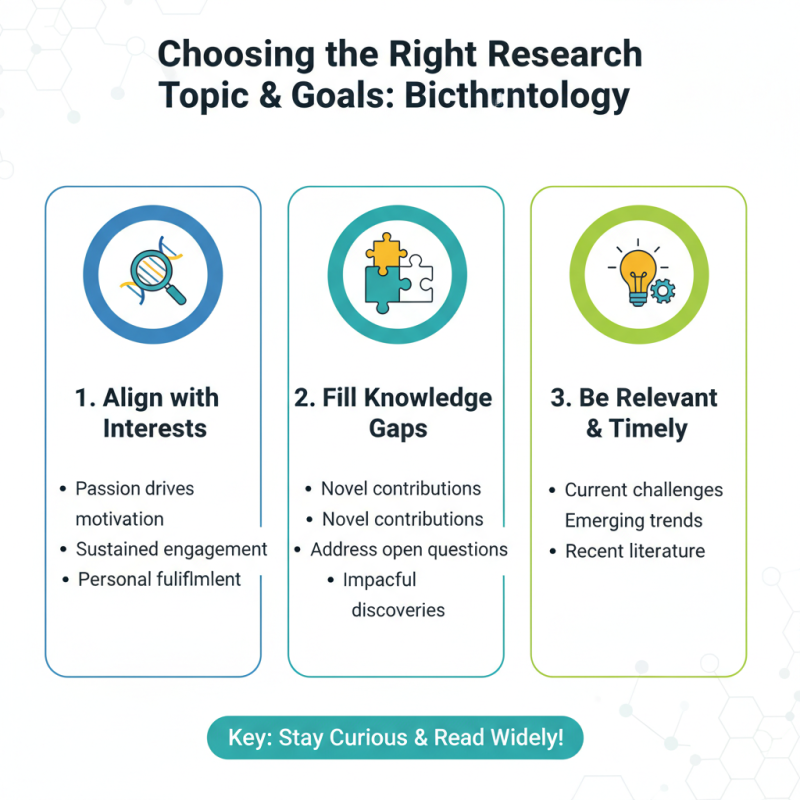
Choosing the right research topic is crucial in biotechnology. It sets the stage for your entire project. An ideal topic should align with your interests and fill a gap in existing knowledge. This approach leads to impactful findings. Engaging with recent literature often reveals unexplored areas. Pay attention to current challenges in the field. They can inspire relevant research questions.

Setting clear research goals is another essential element. Goals guide your methodology and help measure progress. Define specific objectives and timelines. Regularly assess these goals to ensure they remain achievable. Research can be unpredictable, and your goals may need adjustments. Don't be afraid to pivot if necessary. Embrace this flexibility as part of the research process.

Choosing the right advisors can enhance your project. Experienced mentors offer valuable insights and alternative perspectives. Their guidance can help refine your focus or approach. Building a network is equally important. Engage with peers and attend conferences. This exposure enriches your understanding and sparks new ideas. While uncertainty is part of the process, having the right framework can lead to meaningful contributions in biotechnology.

Essential Laboratory Techniques and Best Practices

In biotechnology research, mastering essential laboratory techniques is crucial for success. Accurate pipetting is fundamental. Even minor errors can lead to significant discrepancies in results. Regularly calibrating your pipettes helps ensure accuracy. This should be part of your routine.

Maintaining a sterile environment is also vital. Contamination can compromise your experiments. Always use gloves and practice good laboratory hygiene. When working with cell cultures, be vigilant. Regularly check for signs of contamination. It is critical to track your reagents' expiration dates, as using expired materials can yield unreliable results.

Data management is another key practice. Organizing your experiment records can save time. It's vital to document your methods and results comprehensively. Inarching, reflecting on your methods at each stage can reveal flaws in your process. Recognizing the potential for error can lead to improvements in future experiments.

Effective Data Management and Analysis Strategies

Effective data management and analysis strategies are crucial for successful biotechnology research. The complexity of biological data demands a structured approach. Implementing robust data management practices can save researchers valuable time and resources.

Establish clear data organization methods. Use consistent naming conventions and standardized file formats. This simplifies collaboration and reduces the risk of errors. Regularly back up your data to prevent loss. A simple external drive or cloud service can provide data security.

Employ powerful data analysis tools. Familiarize yourself with various software packages that cater to your research needs. These tools often allow for efficient handling of large datasets. However, it’s essential to remain critical of your analysis. Bad data can lead to flawed conclusions. Always verify your results against existing literature. Seek feedback from experienced colleagues. Their insights can help identify potential biases or oversights in your methodology. Adopting these strategies will strengthen the reliability of your research outcomes.

10 Essential Tips for Successful Biotechnology Research

Tip No. Research Strategy Data Management Technique Analysis Method Key Tool/Software
1 Formulate a clear hypothesis Organize files systematically Statistical Analysis R or Python
2 Conduct thorough literature review Use version control Bioinformatics Tools BLAST, Galaxy
3 Design robust experiments Data backup protocols Machine Learning TensorFlow, Scikit-learn
4 Utilize control groups Data encryption methods Next Generation Sequencing QGIS, Bioconductor
5 Ensure reproducibility Comprehensive data logging Data Visualization Tableau, ggplot2

Collaboration and Networking in Biotechnology Research

Collaboration is a cornerstone of successful biotechnology research. Building a network can provide access to diverse expertise. Collaborating with universities, research institutions, and industry professionals fosters innovation. Engaging in interdisciplinary projects often leads to groundbreaking discoveries. Teams that combine various skills tend to solve complex problems more effectively.

Networking events can help researchers form valuable connections. Attending conferences and seminars is crucial for sharing ideas. These gatherings offer opportunities to meet potential collaborators. Presenting research findings can attract attention and spark discussions. Online platforms also play a significant role in connecting scientists around the globe. They provide forums for sharing experiences and challenges faced in the lab.

However, collaboration does come with challenges. Different opinions can lead to conflicts. Time management becomes crucial when coordinating team efforts. Each member brings unique insights, but aligning goals is essential. Navigating these interpersonal dynamics requires patience and openness. Reflecting on past experiences can guide future collaborations, improving outcomes. Ultimately, embracing both the strengths and weaknesses in teamwork is key to advancing research in biotechnology.

Request for Quote

Please fill in as much details as possible and we will take care of your request as soon as possible

Skip to content