
What Is the Best Biotechnology Course for Career Growth?
Choosing the best Biotechnology Course can shape your skills, confidence, and long-term career direction. However, no single program suits every learner. The right choice depends on your goals, previous education, budget, and preferred work setting. A student interested in vaccine development may need stronger training in molecular biology and cell culture. Someone targeting bioinformatics may benefit more from programming, statistics, and genomic data analysis.
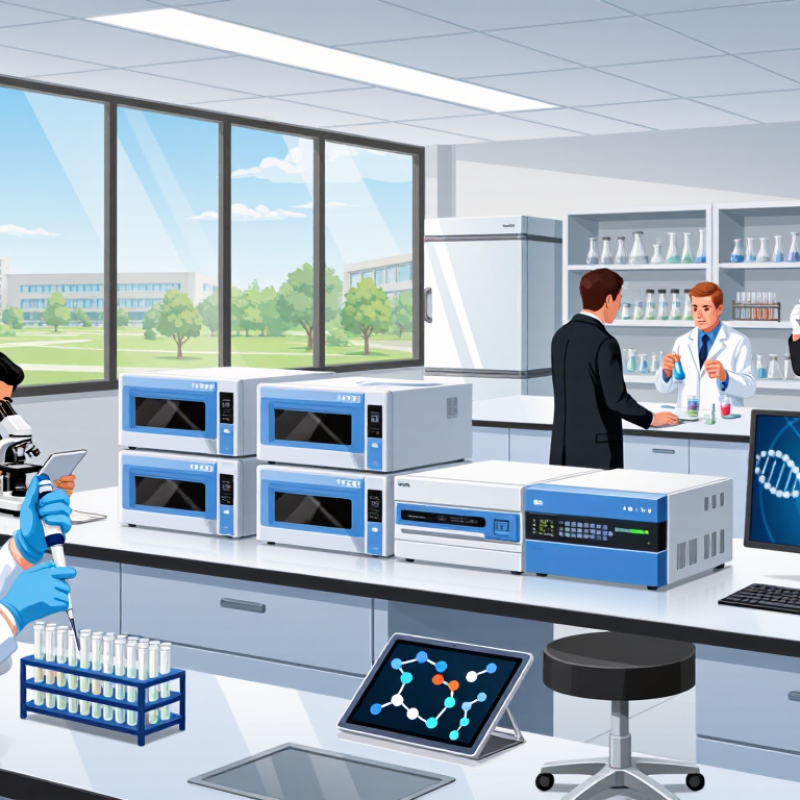
A career-focused course should combine credible theory with supervised practical work. Look for laboratory sessions involving pipetting, aseptic techniques, PCR, microscopy, and sample documentation. These details matter. They reflect the routines found in research laboratories, quality-control departments, and clinical manufacturing environments. Experienced instructors can also explain how scientific results become reliable, reproducible, and ethically acceptable. Accreditation, updated equipment, industry partnerships, and graduate outcomes provide useful evidence of course quality.
Do not trust rankings alone. They can hide important differences in teaching and support. A highly promoted program may offer limited laboratory access. An affordable online course may provide excellent knowledge but little hands-on practice. That weakness deserves careful thought. Speak with current students, review the syllabus, and ask how assessments measure real competence. Employers often value clear documentation, teamwork, data interpretation, and careful problem-solving, not just certificates.
Career growth is rarely immediate. It develops through repeated practice, honest feedback, and continued learning. The strongest Biotechnology Course is usually the one that connects your interests with measurable skills and realistic employment opportunities. This guide explores those factors, while acknowledging that course decisions involve uncertainty. Your ideal path may change as biotechnology itself evolves.
Biotechnology Courses: Definition, Scope, and Career Relevance
What Is the Best Biotechnology Course for Career Growth?
Biotechnology combines biology, chemistry, data analysis, and engineering to solve practical problems. A strong course explains how cells, genes, proteins, and microorganisms support healthcare, agriculture, food production, and environmental science. Students should also learn laboratory safety, research ethics, quality control, and basic statistics. These subjects connect classroom theory with real laboratory decisions.
The field offers varied career paths, including laboratory technician, clinical research assistant, quality specialist, bioprocess associate, and bioinformatics analyst. Course relevance depends on training depth, laboratory practice, and assessment quality. Hands-on work matters. For example, students might document a sample, interpret a growth curve, or identify errors in a testing procedure. Employers often value careful records as much as technical ability. A common mistake is choosing a course only because it sounds advanced. I would question any program with impressive promises but limited practical training.
Tips: Check the syllabus for laboratory hours, safety training, statistics, and project work. Ask whether instructors have current research or industry experience. Review student assessment methods, not only course titles. Build a small portfolio with clear experiment notes, data charts, and reflections. Stay curious. Progress is rarely perfectly linear.
What Is the Best Biotechnology Course for Career Growth? - Biotechnology Courses: Definition, Scope, and Career Relevance
A practical comparison of biotechnology learning pathways, technical skills, study requirements, and career relevance.
| Course Pathway | Typical Study Level | Typical Duration | Core Knowledge Areas | Practical Skills Developed | Common Career Directions | Recommended Background | Career Relevance |
|---|---|---|---|---|---|---|---|
| Introduction to Biotechnology Foundation |
Secondary, undergraduate, or continuing education | 4–12 weeks | Biological systems, cells, DNA, proteins, biotechnology applications, laboratory safety, and ethics | Basic laboratory calculations, scientific reading, data interpretation, and safe handling of biological materials | Laboratory assistant Technical trainee Further study | General science education; chemistry and biology are helpful but not always required | Medium Useful for exploring the field and preparing for advanced study |
| Molecular Biology and Genetic Engineering Core technical |
Undergraduate or postgraduate | One semester to two years | DNA replication, gene expression, recombinant DNA, cloning concepts, mutations, and genetic analysis | Pipetting, nucleic-acid extraction, polymerase chain reaction, gel electrophoresis, and sequence interpretation | Molecular biology technician Research assistant Genomics technician | Biology, molecular biology, biochemistry, or a related laboratory science | High Provides widely used skills for research, diagnostics, and bioprocess development |
| Cell Culture and Tissue Engineering Laboratory specialization |
Undergraduate advanced module or postgraduate | 8 weeks to two years | Cell biology, aseptic technique, cell viability, three-dimensional culture, biomaterials, and tissue repair principles | Cell maintenance, contamination control, microscopy, viability assays, and basic experimental design | Cell culture technician Regenerative medicine assistant Preclinical research support | Cell biology, microbiology, or biomedical science; hands-on laboratory training is strongly beneficial | High Relevant to biomedical research, cell-based studies, and regenerative medicine |
| Bioprocessing and Fermentation Technology Industrial biotechnology |
Undergraduate, postgraduate, or professional training | 8 weeks to two years | Microbial growth, fermentation, upstream processing, downstream recovery, scale-up, and process monitoring | Bioreactor operation, pH and dissolved-oxygen monitoring, sampling, filtration, chromatography concepts, and process documentation | Bioprocess technician Manufacturing associate Process-development assistant | Biology, microbiology, chemical engineering, biochemical engineering, or a related discipline | High Strong preparation for the production of biologics, enzymes, vaccines, and other bio-based products |
| Bioinformatics and Computational Biology Data-focused |
Undergraduate advanced module, postgraduate, or professional training | 8 weeks to two years | Biological databases, sequence analysis, genomics, statistics, data visualization, and reproducible workflows | Basic programming, sequence alignment, database searches, statistical analysis, and interpretation of biological datasets | Bioinformatics analyst Genomics data assistant Computational research support | Biology, mathematics, statistics, computer science, or a combination of these subjects | High Supports data-intensive research and the growing use of genomics and computational methods |
| Biotechnology Quality Control and Assurance Quality and compliance |
Professional, undergraduate, or postgraduate | 4 weeks to one year | Good laboratory practice, documentation, validation, quality systems, deviation management, and risk-based thinking | Standard operating procedures, record review, analytical testing, audit preparation, and controlled documentation | Quality control analyst Quality assurance associate Compliance assistant | Life sciences, chemistry, pharmacy, microbiology, or laboratory operations experience | High Valuable wherever biological products and laboratory processes require controlled quality systems |
| Biotechnology Regulatory Affairs Regulatory specialization |
Postgraduate certificate or professional training | 8 weeks to one year | Product classification, technical dossiers, regulatory pathways, safety evidence, labeling, and post-market obligations | Document preparation, evidence assessment, submission planning, regulatory research, and cross-functional communication | Regulatory affairs assistant Submission coordinator Scientific documentation specialist | Life sciences, pharmacy, medicine, biotechnology, or experience with technical documentation | High Useful for roles connecting scientific development, product safety, and regulatory requirements |
| Clinical Research and Translational Biotechnology Applied biomedical |
Postgraduate or professional training | 8 weeks to two years | Study design, clinical research phases, research ethics, biological endpoints, data management, and translation from laboratory to patient use | Protocol review, sample tracking, research documentation, basic clinical data review, and communication with multidisciplinary teams | Clinical research coordinator Translational research assistant Clinical data support | Life sciences, nursing, medicine, pharmacy, public health, or related health disciplines | High Bridges laboratory discoveries with clinical development and evidence-based healthcare |
| Environmental and Agricultural Biotechnology Sector specialization |
Undergraduate or postgraduate | One semester to two years | Microbial ecology, bioremediation, plant biotechnology, soil biology, sustainable production, and biosafety | Microbial isolation, environmental sampling, plant tissue culture, biological assays, and ecological data analysis | Environmental laboratory technician Agricultural biotechnology assistant Sustainability research support | Biology, microbiology, environmental science, agriculture, or plant science | Medium to high Relevant to sustainable agriculture, environmental monitoring, and bio-based solutions |
| Biotechnology Management and Entrepreneurship Leadership and business |
Postgraduate or professional training | 8 weeks to one year | Technology assessment, intellectual property, project management, funding strategy, commercialization, and responsible innovation | Market analysis, project planning, scientific communication, budgeting, risk assessment, and stakeholder management | Project coordinator Technology-transfer assistant Scientific product specialist | A science or engineering degree; laboratory or research experience is advantageous | Medium to high Best suited to professionals seeking cross-functional, management, or commercialization roles |
Note: Duration, entry requirements, and job titles vary by institution, country, qualification framework, and employer. Practical laboratory experience, data literacy, documentation skills, and knowledge of ethics and biosafety can strengthen career outcomes across most biotechnology pathways.
Related Posts
-

Why Should You Consider a Biotechnology Course for Your Career Growth?
-

Top 10 Biotechnology Research Innovations Emerging from China?
-

Essential Biotech Newsletter Tips for Global Buyers Insights?
-

How to Start Your Own Biotech Lab for Innovative Research and Development?
-

How to Choose the Best Biotechnology Training Program for Your Career?
-

Latest Advances in Biotechnology for Global Buyers?